Back to blog home

Healthcare organizations often treat patient acquisition and patient experience as separate priorities. One lives in marketing. The other lives in care delivery.
In reality, they are the same effort.
The experience patients have when trying to contact your clinic, schedule care, and communicate directly with your team shapes whether they choose your organization in the first place.
Several years ago, we explored how patient experience influences patient acquisition. Since then, patient expectations and communication technology have changed dramatically. Access to care, response speed, and digital communication now shape the patient experience long before someone walks in the door.
Today, the first patient experience typically occurs when someone attempts to contact your clinic.
That moment often determines whether they become a patient at all. Research consistently shows that convenience and access play a major role in healthcare decisions. In Accenture’s Digital Health Consumer Survey, 80% of patients say convenience and access influence their choice of provider.
Clinics that make it easy to connect, schedule care, and communicate clearly are far more likely to attract and retain patients.
Read on to learn about five ways the modern patient experience directly drives patient acquisition.
1. Make Contacting Your Clinic Easy
For most patients, the first interaction with your organization is not a visit to your office. It is a phone call, text message, or website inquiry.
Too often, that first step becomes a barrier. Patients encounter long hold times, unanswered phones, voicemail loops, confusing phone trees, or limited office hours. Each of these moments shapes how patients perceive your organization.
According to PR Newswire, 28% of patients report switching providers due to a poor digital or communication experience.
When contacting a clinic is simple, patients are far more likely to complete the scheduling process.
Modern healthcare organizations improve this initial experience by offering multiple ways to connect, including phone, text messaging, and website chat. The goal is straightforward: remove friction from the first step of the patient journey.

Case Study: Ascentist Healthcare
By simplfying the process for patients to schedule ear tube surgery for kids, Ascentist Healthcare generated over $1.25M in revenue while cutting surgery wait times by 96%.
2. Respond Faster Than Patients Expect
Speed has become a defining part of the patient experience.
When patients leave a message and wait hours or days for a response, they often assume the clinic is difficult to reach or too busy to help. In many markets, another provider is only a search result away.
Response time directly influences whether a patient completes the scheduling process, how they rate the clinic online, and whether they recommend the organization to others.
Clinics are increasingly using messaging, automation, and workflow improvements to reduce response times without increasing staff workload.
Clinics that respond quickly send a clear signal: patients can rely on this team when they need help.
3. Remove Friction From Scheduling

Scheduling an appointment should be simple. For many patients, it remains one of the most frustrating aspects of the healthcare experience. Instead of quickly securing care, patients often face long hold times, multiple transfers between departments, limited phone hours, or voicemail tag with busy front desks.
Many clinics are redesigning how scheduling works. Online self-scheduling, messaging-based appointment requests, and automated workflows help staff confirm and manage visits more efficiently. These tools make it easier for patients to book care when they are ready rather than waiting for the office to return a call.
Some clinics are also introducing AI voice agents to handle routine scheduling calls and common requests. With solutions like Nia, OhMD’s AI voice agent, patients can call a clinic and schedule or manage appointments quickly while complex requests still route to staff.
When scheduling becomes simple and predictable, more patients easily complete the journey from inquiry to scheduled visit.

Chat with an AI Expert
Talk with our team about how AI agents can help your clinic respond faster and schedule more patients.
4. Communicate the Way Patients Prefer
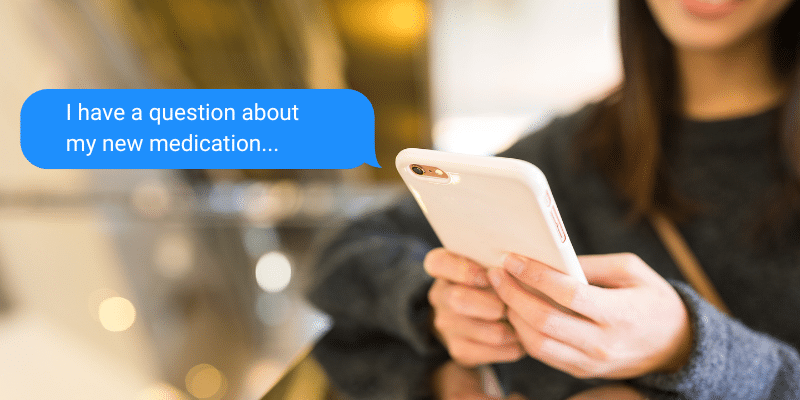
Patient communication expectations have changed dramatically over the past decade. Patients increasingly expect healthcare communication to feel as simple and convenient as the services they use in other parts of their lives.
That often means text messaging, secure messaging, automated reminders, and easy follow-up communication. Clear communication improves patient understanding and reduces confusion about next steps. It also reduces unnecessary phone calls, allowing staff to focus on higher-value work.
When communication is simple and consistent, patients feel more confident in their care and are more likely to recommend the clinic to others.
5. Deliver a Consistent Experience After the Visit
Patient acquisition does not end once an appointment is booked. In many ways, the experience after the visit determines whether a patient becomes part of your clinic long-term.
Clinics that facilitate easy post-visit communication create a significant difference in outcomes. Patients can review instructions, ask follow-up questions, and schedule additional care without unnecessary friction. This stage of the experience strongly influences whether patients return, leave positive reviews, or recommend the clinic to friends and family.
Strong post-visit communication also improves operational outcomes. Appointment reminders reduce no-shows. Follow-up messages help patients complete care plans. Secure messaging provides patients with a convenient way to ask questions without needing to call the clinic.
Many clinics support this part of the patient journey with secure messaging, automated reminders, and digital follow-up that keep patients connected without increasing staff workload.
Over time, this consistency builds trust. Patients who feel informed and supported are far more likely to return and recommend the clinic to others.o improve access while keeping communication personal and connected to the clinic.
The Connection Between Patient Experience and Growth

Patient acquisition in healthcare is not just a marketing activity. It begins with the everyday interactions patients have when they try to reach your clinic, schedule care, and communicate with your team.
Clinics that grow consistently remove friction from each of these moments:
- They make it easy for patients to contact the clinic
- They respond quickly
- They simplify scheduling
- They communicate clearly
- They stay connected after the visit
When these experiences are reliable, patients feel confident choosing the clinic. They are more likely to schedule future care, make return visits, and recommend the clinic to others. Ultimately, patient experience and patient acquisition are not distinct strategies. They are the same effort.
Clinics that focus on access, communication, and consistent follow-up build stronger relationships with patients, and those relationships naturally drive growth.
FAQs
How does patient experience affect patient acquisition?
Patient experience affects patient acquisition by shaping how easy it is for people to contact a clinic, schedule care, get answers, and feel supported. When patients can quickly reach a clinic, get clear responses, and schedule appointments without friction, they are more likely to become new patients. A smooth first interaction builds trust and increases the likelihood that someone chooses your clinic over another provider.
What is the first patient experience for most clinics?
For most clinics, the first patient experience happens before the visit. It usually begins when someone tries to contact the clinic by phone, text, website form, or online scheduling tool. If that first interaction is slow or frustrating, patients often look elsewhere. When the process is simple and responsive, more inquiries turn into scheduled visits.
Why does faster response time matter in healthcare?
Response time has a significant impact on whether patients schedule care. When patients leave a message and wait hours or days for a reply, many assume the clinic is too busy or difficult to reach. Faster responses increase appointment bookings, reduce patient frustration, and improve trust early in the relationship.
How can healthcare clinics improve patient experience without adding more staff?
Clinics can enhance the patient experience by reducing communication friction and optimizing workflows. Tools such as secure texting, automated reminders, online scheduling, and AI voice handling help clinics respond quickly and keep patients informed without increasing workload for front desk staff.
What role does communication play in patient experience?
Communication is one of the most important parts of the patient experience. Clear instructions, quick answers to questions, and convenient messaging help patients feel supported throughout their care journey. Clinics that communicate clearly and consistently often see higher patient satisfaction, stronger retention, and more referrals.