Back to blog home
“Press 1 for appointments, press 2 for billing, press 3 to hate your life.”
That’s the automated medical answering service most practices think of. Phone trees that trap patients in menu hell while solving exactly nothing.
Real automation works differently. AI picks up and has an actual conversation. No buttons. No menus. No “please hold while we transfer your call to another menu.”
Let’s talk about automated medical answering that actually works.
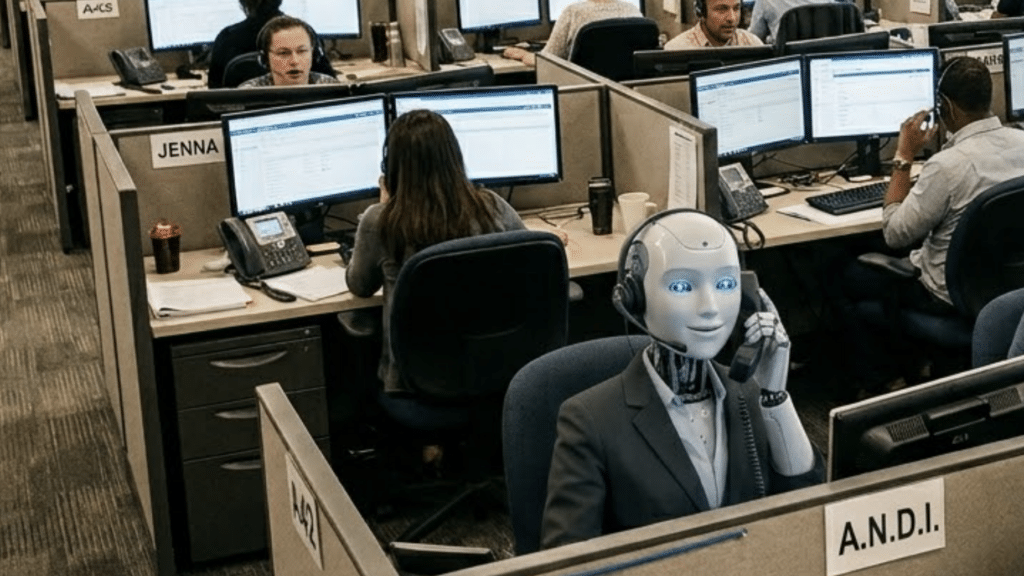
What’s the Difference Between Phone Trees and Real Automation?
Phone trees route calls. Automated medical answering resolves them. Massive difference.
Phone tree conversation:
- “Press 1 for appointments”
- Patient presses 1
- “Press 1 for new appointments, press 2 to reschedule”
- Patient presses 2
- “Please hold while we connect you”
- 3 minutes of hold music
- Human picks up: “How can I help you?”
- Patient repeats everything they’ve already indicated
AI automation conversation:
- “Hi, this is Dr. Smith’s office, how can I help you?”
- “I need to reschedule my Thursday appointment”
- “Sure, I see your appointment on Thursday at 2 PM. What time works better for you?”
- “How about Friday morning?”
- “I have Friday at 9 AM or 10:30 AM available”
- “9 AM works”
- “Perfect, you’re all set for Friday at 9 AM. Anything else?”
Same result. One takes 30 seconds. The other takes 5 minutes and makes everyone miserable.
How Does an Automated Medical Answering Service Actually Work?
A patient calls your main number. AI picks up instantly – no rings, no hold music. They talk naturally about what they need. AI figures it out and takes action.
Need an appointment? AI checks your real schedule and offers actual times.
Need a refill? AI captures the details and routes to your care team.
Have a billing question? AI looks it up and answers immediately.
When something needs human judgment – upset patient, clinical question, complex situation – AI transfers with full context. Your staff knows exactly who called and why before they pick up the phone.
No training patients on button sequences. No “I’m sorry, I didn’t understand that.” Just normal conversation that gets things done.
The American Medical Association found that admin tasks now consume more practice time than patient care. Automated medical answering gives that time back by handling the routine stuff that doesn’t need a human.
Why Do Phone Trees Fail So Badly in Healthcare?
Phone trees were designed for call centers, not medical practices. They assume:
- Callers have simple, categorizable needs
- Wait times are acceptable
- Repeating information is fine
- Getting transferred around is normal
None of that works in healthcare.
Patient needs overlap: “I need to reschedule AND ask about my medication AND update my insurance.” Phone trees force them to call back multiple times or get bounced between departments.
Medical urgency doesn’t fit menus. “Press 1 for emergencies” – but what if you’re not sure if it’s an emergency? What if you need to schedule urgent care but not ER-level urgent?
Healthcare is personal. When your kid has a fever at midnight, you want to talk to someone who understands medical concerns, not navigate a corporation-designed menu tree.
What Can Automated Medical Answering Handle vs Route?
AI automation excels at the calls that eat up 68% of your phone time:
Handled automatically:
- Appointment scheduling, rescheduling, and cancellations
- Prescription refill requests with pharmacy routing
- Billing questions and payment processing
- Office information (hours, location, parking, directions)
- Insurance verification and authorization status
- Lab result inquiries (for established protocols)
- Post-visit follow-up scheduling
Routed to humans:
- Clinical symptoms and health concerns
- Upset or distressed patients
- Complex insurance or billing disputes
- New patient intake requiring judgment
- Medication reactions or side effects
- Any call where the patient sounds confused or frustrated
The routing is smart and conservative. When AI detects urgency, emotion, or complexity, it hands off immediately with complete context.
Cost Comparison: Phone Trees vs AI vs Live Services
Here’s what each approach actually costs for a typical family practice:
| Service Type | Monthly Cost | Setup Fee | Patient Experience | Problem Resolution |
|---|---|---|---|---|
| Basic Phone Tree | $100-300 | $500 | Frustrating | Routes to human |
| Advanced IVR System | $500-1,000 | $2,000 | Less frustrating | Routes to human |
| Live Answering Service | $800-2,000 | $300 | Good | Takes messages |
| AI Automated Answering | $500-800 | $0 | Excellent | Resolves issues |
The math is brutal for traditional phone trees. You pay setup costs and monthly fees to frustrate patients who still need human help for everything important.
AI costs the same as basic live service but actually does the work instead of just taking messages.
How Does AI Handle Complex Medical Scenarios?
AI doesn’t practice medicine. It follows decision trees and protocols your practice sets up.
Fever call example:
- AI asks age, temperature, duration, other symptoms
- Provides evidence-based guidance for home care
- Offers appointment scheduling if parent wants reassurance
- Routes immediately if red flags present (high fever, breathing issues, severe symptoms)
Medication refill example:
- AI confirms medication name, dose, and pharmacy
- Checks for pending refills in your system
- Routes to care team with complete request details
- Flags controlled substances or medications requiring provider review
Post-procedure question:
- AI reviews post-op instructions already given
- Provides standard guidance for normal recovery questions
- Routes to nurse immediately if complications suspected
- Documents the interaction for provider review
The safety model is simple: AI handles admin and routine guidance. Humans handle clinical decisions. Patients get faster help for simple needs and appropriate care for complex ones.
Real Results From Practices Using Automated Medical Answering
Coastline Orthopedics eliminated call abandonment with automated answering. Patients stopped hanging up because they actually got help instead of menu navigation.
Integrated Spine & Joint Institute cut phone handling time by 66%. Staff went from playing phone tag all day to focusing on patients in the office.
Ascentist Healthcare generated $1.25M in additional revenue through better patient access. When people can actually book appointments, they book more appointments.
Across 2,000+ practices, the pattern is consistent:
- 68% fewer staff-answered calls
- 65% cost savings on phone operations
- 13% reduction in no-shows through better communication
- Near-zero hold times
Does Automated Medical Answering Integrate With EHR Systems?
This is where AI automation wins big over phone trees and live services.
OhMD integrates directly with 85+ EHR systems including athenahealth, eClinicalWorks, AdvancedMD, Epic, Cerner, and others. When AI books an appointment, it appears in your schedule immediately. When patients update information, it syncs to their chart.
Phone trees can’t do this. They just route calls to humans who then do manual data entry.
Traditional live services rarely integrate beyond basic messaging. They take information and fax it to your office for manual processing.
AI automation eliminates the extra steps and data entry that create errors and delays.
What About After-Hours Automated Medical Answering?
This is where automation shows its biggest advantage. Phone trees after hours are useless – they route to voicemail or emergency lines. Live services take messages for morning callbacks.
AI automation works the same at midnight as at noon. Patient calls with a refill request at 10 PM? Handled immediately. Someone needs to schedule a morning appointment? Booked in real-time.
Urgent calls get routed to on-call providers with full context. Routine calls get resolved without waking anyone up.
Practices save $800-1,500 monthly by replacing traditional after-hours services with automated answering that actually helps patients instead of just logging their calls.
How Long Does Automated Medical Answering Setup Take?
Three weeks from contract to full operation:
Week 1: Platform setup, EHR integration, phone system connection. Staff training on new workflows.
Week 2: AI customization for your practice protocols. Testing across different call types and scenarios.
Week 3: Go live with monitoring and adjustment. Fine-tune responses based on real patient interactions.
No hardware installation. No complex phone system changes. The automation works with your existing setup.
Is Automated Medical Answering HIPAA Compliant?
HIPAA compliance requires encryption, audit trails, and Business Associate Agreements. Most phone tree systems don’t meet healthcare security standards.
OhMD’s automated medical answering is built for healthcare:
- All calls encrypted in transit and at rest
- Complete audit trails for every interaction
- BAA included with every plan
- Voice data processed in HIPAA-compliant infrastructure
- No recordings stored beyond compliance requirements
Your automated answering is more secure than traditional services using human operators and paper message slips.
What’s Included in OhMD’s Automated Medical Answering Service?
The platform includes everything you need for complete patient communication:
- AI voice automation for phone calls
- Two-way HIPAA-compliant texting
- Appointment reminders with 98% read rates
- EHR integration for real-time data sync
- Workflow automation for follow-ups and outreach
- Review management tools for reputation
- Unified inbox for all patient conversations
- 24/7 coverage including after-hours and weekends
Annual contracts start at $500/month. No per-call charges for automation usage.
Why Practices Choose AI Over Phone Trees and Live Services
Solves problems instead of routing them: Patients get help during the call, not promises of callbacks.
Works consistently: No bad days, sick days, or training new operators. Same quality help 24/7.
Costs less: AI automation costs 50-65% less than live services while delivering better results.
Integrates properly: Real-time EHR sync eliminates data entry and manual processing.
Scales automatically: Handle 10 calls or 100 calls simultaneously with no additional staffing.
Protects staff time: Front desk focuses on patients in the office instead of phone management all day.
The Future Is Automated, But Smart About It
Basic phone trees were automation 1.0 – route calls to humans who do the work.
Live answering services are expensive but still require callbacks and manual processing.
AI-powered automated medical answering is automation 2.0 – resolve issues during the call while routing complex cases appropriately.
The practices winning on patient satisfaction and efficiency have made the switch. The question isn’t whether to automate – it’s whether to automate intelligently.
For the complete comparison of all answering service types, check our medical answering service guide
Schedule a demo and hear how real automated medical answering handles patient calls. Compare it to phone trees and decide which approach your patients deserve.
Frequently Asked Questions
Phone trees route calls through menus to humans who do the work. AI automated answering resolves patient requests during the call – booking appointments, processing refills, and answering questions without transfers.
OhMD’s AI automated answering starts at $500/month with usage-based voice costs. Phone tree systems cost $100-1,000/month but still require human staff. Live services cost $800-2,000/month for message-taking.
I handles 68% of routine calls including scheduling, refills, billing questions, and office information. Clinical symptoms, upset patients, and complex situations get routed to staff with full context.
OhMD integrates with 85+ EHR systems for real-time appointment booking and data sync. Phone trees can’t book appointments. Live services require manual data entry.
OhMD’s automated answering includes full HIPAA compliance with encrypted calls, audit trails, and BAA. More secure than traditional phone trees or paper message systems.
Three weeks total: Week 1 platform setup and EHR integration, Week 2 AI customization and testing, Week 3 go-live and optimization. No hardware installation required.